
- Buy Crypto
- Markets
 Futures
- Spot
- Copy Trade
- Earn
- More
Buy and HODL: Why Dead Man’s Hand Beats Active Traders in the Crypto Market
By: bitcoin ethereum news|2025/05/15 12:15:04
0
Share
Key Insights: Ethereum +20% in one day Altcoins +11% since yesterday Nearly all tokens gained “Dead” investors (buy-and-hold) beat active traders Patience outperformed timing A disciplined crypto investing strategy is proving its worth again, as Ethereum (ETH) price’s 20% rally in early May 2025 rewarded long-term holders who stayed the course through recent market turbulence. On May 9th, 2025, Ethereum Price climbed roughly 20% in a single day, jumping to about $2,445 per coin. Altcoins rallied alongside ether – for example, Solana (SOL), Dogecoin (DOGE) and Cardano (ADA) each gained mid-single-digit percentages as the broader crypto complex surged. Trading indicators reflected the broad move: CoinMarketCap’s Altcoin Season Index jumped from 23 to 39 in just a few days, signaling unusually strong breadth. In plain terms, nearly every token was higher on the week. This kind of wild, fast rally illustrates how quickly the market can move – and how nerve-wracking it can feel to watch prices swing. Yet history shows that volatile bull runs often reward the investors who do the least. Behavioral finance offers a famous insight here. A so-called “dead person” study by Fidelity, one of the largest asset managers in the world, found that the best-performing brokerage accounts over a ten-year span were ones where the owner was, ironically, inactive or even deceased. In other words, doing nothing beats constant trading. The Fidelity data showed the highest returns came from forgotten accounts – owners who simply left their money invested and let compound growth take over. The runner-up best returns, not surprisingly, were from people who had also forgotten they even owned the account. That finding matches what we know about market psychology. In a volatile bull run, every day brings fresh headlines and whims. News or speculation can drive prices up or down on a whim. But frequent trading tends to invite bad timing. As one industry observerput it, “because of our behavioral biases, we often find ourselves buying high and selling low.” Humans are prone to panic-selling the dips or chasing after the latest spike. By contrast, the “dead person” investor doesn’t watch the charts – they simply stay invested through ebbs and flows. Over long periods, that passive stance often trumps active timing. The recent crypto rally is a real-world test of this buy-and-hold mindset. Those who held through the pain of last year’s bear market are finally reaping rewards. Ethereum’s 20% leap came after months of doubts, and it wiped out massive, short positions in minutes. In the same rally, even smaller altcoins spiked double digits, lifting portfolios across the board. By contrast, a trader who tried to pick tops and bottoms might have missed the move or reacted too late. Staying put was the simple crypto investing strategy that worked best this time around. This isn’t a fluke. Crypto history is full of big swings where patient holders win. For example, look back at Bitcoin and Ether cycles: prices often overshoot on the way up or down, only to continue moving towards the north in the long run. Investors who “sell the news” or try to time the exact top usually underperform. Academic research has long warned that missing just a handful of the market’s best days can slash returns. In bull markets, the handful of biggest up-days often account for a huge fraction of a coin’s lifetime gains. By sitting it out, the faithful “HODLer” (a crypto slang for a buy-and-hold enthusiast) avoids the urge to jump ship at the worst time. As one crypto pundit notes, if an asset grows fifty-fold over a decade, there is simply no need to trade it day to day – you just let compound gains run. So, in this run-up, the key lesson for crypto investors is patience. The data suggest that the best strategy in a fast-moving bull market can be to do nothing. A report by my colleague Godfrey Benjamin in September, shows that 65% of crypto investors are HODLers. History and behavioral studies line up on this: when markets roar ahead, the most successful accounts are often the ones of people who took a hands-off approach. It’s a counterintuitive insight, but a powerful one. As Ethereum and its peers rally, it seems the “buy and hold crypto” strategy is paying off for those who behaved like, well, dead men – at least in their trading accounts. Source: https://www.thecoinrepublic.com/2025/05/14/buy-and-hodl-why-dead-mans-hand-beats-active-traders-in-the-crypto-market/
You may also like

The migration of settlement rights: B18 and the institutional starting point of on-chain banks
In the traditional system, banks decide the settlement; in the on-chain system, code begins to take over this responsibility.

From Tencent and Circle: Looking at the Simple and Difficult Questions of Investment
The AI narrative continues to ferment, but the recent performance of related stocks varies, with some in the midst of summer and others as if in winter.

The second half of stablecoins no longer belongs to the crypto circle
What Coinbase doesn't want, Mastercard is eager to buy.

Cursor "Shell" Kimi Controversy Reversed: From Copyright Infringement Allegations to Authorized Collaboration, China's Open Source Model Once Again Becomes a Global AI Foundation
Cursor was accused of being based on Kimi K2.5, which sparked controversy, and was later confirmed to be compliant through Fireworks AI due diligence.

The Real Reason Tokens Don't Sell: 90% of Crypto Projects Overlook Investor Relations
Provide an Investor Relations Best Practices Guide for Crypto Projects.

Is the income of pump.fun real, earning a million dollars a day despite the market downturn?
If it can really earn this much, what is the reason for the low price of $PUMP?

The real reason why tokens are not selling: 90% of crypto projects neglect investor relations
Investor Relations Practice Guide for Cryptocurrency Projects.

Who is the true winner of the "Tokenization" narrative?
Virtually everyone benefits, but the reason for the benefit, the timing, and the underlying logic are completely different.

Moss: The Era of AI-Traded by Anyone | Project Introduction
AI Trading Agent is rapidly growing its infrastructure.

Chip Smuggling Case Exposes Regulatory Loophole | Rewire News Evening Update
AI chips have become a strategic asset more sensitive than missiles

How a Structured AI Crypto Trading Bot Won at the WEEX Hackathon
Ritmex demonstrates how disciplined risk control and structured signals can make an AI crypto trading bot more stable and reliable on WEEX, highlighting the importance of combining execution discipline with scalable AI trading systems.

Old Indicator Fails, Three Major New Signals Emerge: BTC True Bottom May Still Be Below $60K
When the grocery shopping auntie on the subway, or Tony the hairdresser, start asking you about BTC, crypto, and cryptocurrency investments, selling immediately will be the only best option.

Meeting OpenClaw Founder at a Hackathon: What Else Can Lobsters Do?
Imperial College London MetaGame: AI Agent × Web3 Landing Three Major Directions.
Huang Renxun's Latest Podcast Transcript: NVIDIA's Future, Embodied Intelligence and Agent Development, Soaring Demand for Inferencing, and AI's PR Crisis
The future of competition is not only about whose model is bigger, whose computing power is stronger, but also about who understands the industry better, who can more deeply integrate AI into real processes, and who can organize these capabilities into a set of executable, scalable systems
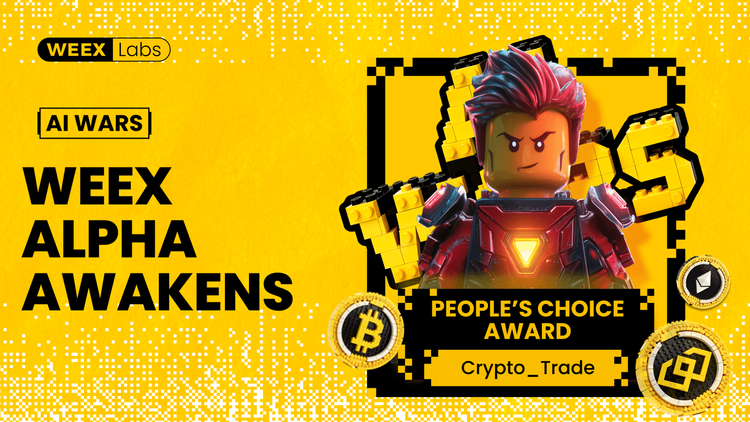
How a Structured AI Crypto Trading Bot Won at the WEEX Hackathon
Crypto_Trade shows how structured inputs and controlled adaptability can build a more stable and reliable AI crypto trading bot within the WEEX AI Trading Hackathon, highlighting a practical path toward scalable AI trading systems.

AI Starts to Devour the Manufacturing Industry | Rewire News Morning Edition
When Bezos starts using AI to buy factories instead of building data centers, it shows that he believes the next wave of AI's value is not inside the box.
When Scaling Meets Speed, Ethereum Foundation Introduces "Hardness" to Safeguard the Base Layer
Hardness is a protocol-level commitment to Ethereum core properties, including censorship resistance, privacy, security, and permissionlessness.
Google, Circle, Stripe Flock Together to Let AI Spend Money: Payment Giants' Joys and Worries in 2026 Q1
The real enemy is no longer each other, but zero cost itself
The migration of settlement rights: B18 and the institutional starting point of on-chain banks
In the traditional system, banks decide the settlement; in the on-chain system, code begins to take over this responsibility.
From Tencent and Circle: Looking at the Simple and Difficult Questions of Investment
The AI narrative continues to ferment, but the recent performance of related stocks varies, with some in the midst of summer and others as if in winter.
The second half of stablecoins no longer belongs to the crypto circle
What Coinbase doesn't want, Mastercard is eager to buy.
Cursor "Shell" Kimi Controversy Reversed: From Copyright Infringement Allegations to Authorized Collaboration, China's Open Source Model Once Again Becomes a Global AI Foundation
Cursor was accused of being based on Kimi K2.5, which sparked controversy, and was later confirmed to be compliant through Fireworks AI due diligence.
The Real Reason Tokens Don't Sell: 90% of Crypto Projects Overlook Investor Relations
Provide an Investor Relations Best Practices Guide for Crypto Projects.
Is the income of pump.fun real, earning a million dollars a day despite the market downturn?
If it can really earn this much, what is the reason for the low price of $PUMP?


 App
App