
- Buy Crypto
- Markets
 Futures
- Spot
- Copy Trade
- Earn
- More
Decentralized OORT AI data hits top ranks on Google Kaggle
By: bitcoin ethereum news|2025/05/15 13:30:07
0
Share
An artificial intelligence training image data set developed by decentralized AI solution provider OORT has seen considerable success on Google’s platform Kaggle. OORT’s Diverse Tools Kaggle data set listing was released in early April; since then, it has climbed to the first page in multiple categories. Kaggle is a Google-owned online platform for data science and machine learning competitions, learning and collaboration. Ramkumar Subramaniam, core contributor at crypto AI project OpenLedger, told Cointelegraph that “a front-page Kaggle ranking is a strong social signal, indicating that the data set is engaging the right communities of data scientists, machine learning engineers and practitioners.“ Max Li, founder and CEO of OORT, told Cointelegraph that the firm “observed promising engagement metrics that validate the early demand and relevance” of its training data gathered through a decentralized model. He added: “The organic interest from the community, including active usage and contributions — demonstrates how decentralized, community-driven data pipelines like OORT’s can achieve rapid distribution and engagement without relying on centralized intermediaries.“ Li also said that OORT plans to release multiple data sets in the coming months. Among those is an in-car voice commands data set, one for smart home voice commands and another for deepfake videos meant to improve AI-powered media verification. Related: AI agents are coming for DeFi — Wallets are the weakest link First page in multiple categories The data set in question was independently verified by Cointelegraph to have reached the first page in Kaggle’s General AI, Retail & Shopping, Manufacturing, and Engineering categories earlier this month. At the time of publication, it lost those positions following a possibly unrelated data set update on May 6 and another on May 14. While recognizing the achievement, Subramaniam told Cointelegraph that “it’s not a definitive indicator of real-world adoption or enterprise-grade quality.” He said that what sets OORT’s data set apart “is not just the ranking, but the provenance and incentive layer behind the data set.” He explained: “Unlike centralized vendors that may rely on opaque pipelines, a transparent, token-incentivized system offers traceability, community curation, and the potential for continuous improvement assuming the right governance is in place.“ Lex Sokolin, partner at AI venture capital firm Generative Ventures, said that while he does not think these results are hard to replicate, “it does show that crypto projects can use decentralized incentives to organize economically valuable activity.” Related: Sweat wallet adds AI assistant, expands to multichain DeFi High-quality AI training data: a scarce commodity Data published by AI research firm Epoch AI estimates that human-generated text AI training data will be exhausted in 2028. The pressure is high enough that investors are now mediating deals granting rights to copyrighted materials to AI companies. Reports concerning increasingly scarce AI training data and how it may limit growth in the space have been circulating for years. While synthetic (AI-generated) data is increasingly used with at least some degree of success, human data is still largely viewed as the better alternative, higher-quality data that leads to better AI models. When it comes to images for AI training specifically, things are becoming increasingly complicated with artists sabotaging training efforts on purpose. Meant to protect their images from being used for AI training without permission, Nightshade allows users to “poison” their images and severely degrade model performance. Subramaniam said, “We’re entering an era where high-quality image data will become increasingly scarce.” He also recognized that this scarcity is made more dire by the increasing popularity of image poisoning: “With the rise of techniques like image cloaking and adversarial watermarking to poison AI training, open-source datasets face a dual challenge: quantity and trust.” In this situation, Subramaniam said that verifiable and community-sourced incentivized data sets are “more valuable than ever.” According to him, such projects “can become not just alternatives, but pillars of AI alignment and provenance in the data economy.“ Magazine: AI Eye: AI’s trained on AI content go MAD, is Threads a loss leader for AI data? Source: https://cointelegraph.com/news/oort-decentralized-ai-dataset-climbs-kaggle-rankings?utm_source=rss_feed&utm_medium=feed&utm_campaign=rss_partner_inbound
You may also like

Cursor "Shell" Kimi Controversy Reversed: From Copyright Infringement Allegations to Authorized Collaboration, China's Open Source Model Once Again Becomes a Global AI Foundation
Cursor was accused of being based on Kimi K2.5, which sparked controversy, and was later confirmed to be compliant through Fireworks AI due diligence.

The Real Reason Tokens Don't Sell: 90% of Crypto Projects Overlook Investor Relations
Provide an Investor Relations Best Practices Guide for Crypto Projects.

Is the income of pump.fun real, earning a million dollars a day despite the market downturn?
If it can really earn this much, what is the reason for the low price of $PUMP?

The real reason why tokens are not selling: 90% of crypto projects neglect investor relations
Investor Relations Practice Guide for Cryptocurrency Projects.

Who is the true winner of the "Tokenization" narrative?
Virtually everyone benefits, but the reason for the benefit, the timing, and the underlying logic are completely different.

Moss: The Era of AI-Traded by Anyone | Project Introduction
AI Trading Agent is rapidly growing its infrastructure.

Chip Smuggling Case Exposes Regulatory Loophole | Rewire News Evening Update
AI chips have become a strategic asset more sensitive than missiles

How a Structured AI Crypto Trading Bot Won at the WEEX Hackathon
Ritmex demonstrates how disciplined risk control and structured signals can make an AI crypto trading bot more stable and reliable on WEEX, highlighting the importance of combining execution discipline with scalable AI trading systems.

Old Indicator Fails, Three Major New Signals Emerge: BTC True Bottom May Still Be Below $60K
When the grocery shopping auntie on the subway, or Tony the hairdresser, start asking you about BTC, crypto, and cryptocurrency investments, selling immediately will be the only best option.

Meeting OpenClaw Founder at a Hackathon: What Else Can Lobsters Do?
Imperial College London MetaGame: AI Agent × Web3 Landing Three Major Directions.
Huang Renxun's Latest Podcast Transcript: NVIDIA's Future, Embodied Intelligence and Agent Development, Soaring Demand for Inferencing, and AI's PR Crisis
The future of competition is not only about whose model is bigger, whose computing power is stronger, but also about who understands the industry better, who can more deeply integrate AI into real processes, and who can organize these capabilities into a set of executable, scalable systems
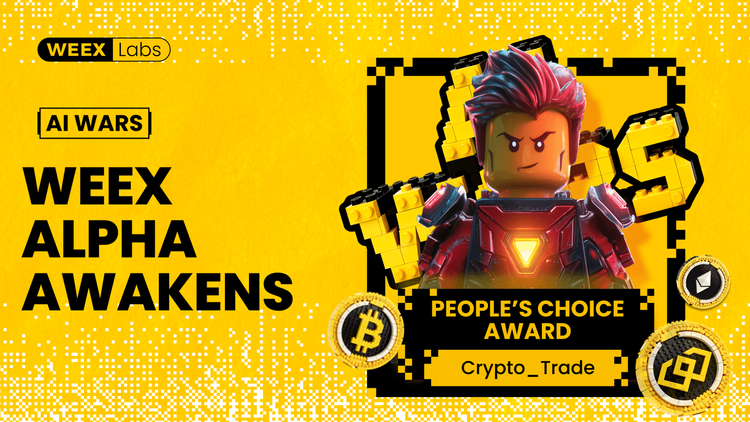
How a Structured AI Crypto Trading Bot Won at the WEEX Hackathon
Crypto_Trade shows how structured inputs and controlled adaptability can build a more stable and reliable AI crypto trading bot within the WEEX AI Trading Hackathon, highlighting a practical path toward scalable AI trading systems.

AI Starts to Devour the Manufacturing Industry | Rewire News Morning Edition
When Bezos starts using AI to buy factories instead of building data centers, it shows that he believes the next wave of AI's value is not inside the box.

When Scaling Meets Speed, Ethereum Foundation Introduces "Hardness" to Safeguard the Base Layer
Hardness is a protocol-level commitment to Ethereum core properties, including censorship resistance, privacy, security, and permissionlessness.
Google, Circle, Stripe Flock Together to Let AI Spend Money: Payment Giants' Joys and Worries in 2026 Q1
The real enemy is no longer each other, but zero cost itself

$100 Billion Factory Purchase: Bezos and Middle Eastern Capital Shift AI Money from Cloud to Shop Floor
Bezos doesn't invest in a new model; he invests in a supply chain.

Xiaomi and MiniMax both unleash their ultimate moves, signaling the start of the Agent Pricing War.
No brand, no marketing, let developers vote with their feet in 8 days

Predicting markets has taken the spotlight, but the Perp DEX has been quietly waging war on traditional exchanges.
During a weekend of relentless volatility, while traditional financial markets were closed, another wave of investors was busy trading gold, oil, and silver on a blockchain platform.
Cursor "Shell" Kimi Controversy Reversed: From Copyright Infringement Allegations to Authorized Collaboration, China's Open Source Model Once Again Becomes a Global AI Foundation
Cursor was accused of being based on Kimi K2.5, which sparked controversy, and was later confirmed to be compliant through Fireworks AI due diligence.
The Real Reason Tokens Don't Sell: 90% of Crypto Projects Overlook Investor Relations
Provide an Investor Relations Best Practices Guide for Crypto Projects.
Is the income of pump.fun real, earning a million dollars a day despite the market downturn?
If it can really earn this much, what is the reason for the low price of $PUMP?
The real reason why tokens are not selling: 90% of crypto projects neglect investor relations
Investor Relations Practice Guide for Cryptocurrency Projects.
Who is the true winner of the "Tokenization" narrative?
Virtually everyone benefits, but the reason for the benefit, the timing, and the underlying logic are completely different.
Moss: The Era of AI-Traded by Anyone | Project Introduction
AI Trading Agent is rapidly growing its infrastructure.


 App
App