
- Buy Crypto
- Markets
 Futures
- Spot
- Copy Trade
- Earn
- More
Former Partners Accuse Hashling NFT Founder of Fraud and Misappropriating Bitcoin Mining Profits in Lawsuit
By: bitcoin ethereum news|2025/05/15 14:45:06
0
Share
The NFT and Bitcoin mining sectors face scrutiny as Jonathan Mills, founder of Hashling NFT, is sued by former partners for alleged financial misconduct. This lawsuit raises critical questions about investor trust and accountability within the fast-evolving crypto landscape, highlighting pressing issues in asset management. As stated in the May 14 court filing, the plaintiffs accuse Mills of fraud and mismanagement, revealing a troubling narrative surrounding the handling of millions in investments. Legal troubles for NFT founder Jonathan Mills raise alarms over investment integrity in the crypto space as partners allege misappropriation of funds. Allegations of Fraud and Mismanagement in the NFT Space The lawsuit claims that Jonathan Mills misappropriated funds tied to both the Hashling NFT project and a connected Bitcoin mining venture. The plaintiffs assert that they were promised equity returns that never materialized, despite their significant financial contributions. In a filing with the Illinois district court, investors reported that Mills had allegedly misrepresented the financial health of both operations. These accusations paint a concerning picture of financial transparency—or lack thereof—in the rapidly shifting domain of digital assets. Investors Raise Alarm Over Equity Misrepresentation The investors allege that they contributed approximately $1.46 million across two NFT drops, only to experience a total absence of returns. Mills is accused of misleading them about the movement of funds to Satoshi Labs LLC , a holding company he established, further complicating their financial entitlements. In addition to the alleged fraud, the plaintiffs’ claims highlight a contentious shareholder agreement purportedly crafted by Mills. Described as “rife with errors,” this agreement ostensibly fixed equity stakes in a manner that heavily favored Mills, undermining the investors’ interests. Background of the Hashling NFT Project The Hashling NFT project emerged from initial discussions between Mills and one of the plaintiffs, Dustin Steerman . Despite Mills’ lack of funding and experience in the NFT sector, the collaborators pushed forward with the project. The drive to innovate within the crypto sphere led them to recruit additional investors for essential roles, demonstrating a lack of apprehension that would later backfire. Steerman’s attorney, Clinton Ind, emphasized that initial enthusiasm for the project was palpable, with all parties willing to contribute towards its growth, illustrating the potential for creative synergy in early blockchain initiatives. Investor Expectation versus Reality Despite promising beginnings, Mills’ management has come under fire as it became apparent they had failed to deliver tangible results. The plaintiffs have called for legal restitution and a constructive trust over project assets, marking a significant escalation in their grievances against Mills. As the litigation unfolds, industry observers will closely monitor the situation, particularly as it reflects broader challenges facing the NFT and cryptocurrency markets. With investor confidence wavering, clarity in practices governing financial operations in digital asset ventures is urgently needed. Conclusion The allegations against Jonathan Mills signify crucial questions about integrity and transparency in the NFT and crypto markets. This legal challenge not only showcases the fallout from alleged mismanagement but also serves as a plea for more robust investor protections. As the crypto ecosystem continues to evolve, ensuring accountability will be essential for fostering trust among investors and the wider community. Source: https://en.coinotag.com/former-partners-accuse-hashling-nft-founder-of-fraud-and-misappropriating-bitcoin-mining-profits-in-lawsuit/
You may also like

Who is the true winner of the "Tokenization" narrative?
Virtually everyone benefits, but the reason for the benefit, the timing, and the underlying logic are completely different.

Moss: The Era of AI-Traded by Anyone | Project Introduction
AI Trading Agent is rapidly growing its infrastructure.

Chip Smuggling Case Exposes Regulatory Loophole | Rewire News Evening Update
AI chips have become a strategic asset more sensitive than missiles

How a Structured AI Crypto Trading Bot Won at the WEEX Hackathon
Ritmex demonstrates how disciplined risk control and structured signals can make an AI crypto trading bot more stable and reliable on WEEX, highlighting the importance of combining execution discipline with scalable AI trading systems.

Old Indicator Fails, Three Major New Signals Emerge: BTC True Bottom May Still Be Below $60K
When the grocery shopping auntie on the subway, or Tony the hairdresser, start asking you about BTC, crypto, and cryptocurrency investments, selling immediately will be the only best option.

Meeting OpenClaw Founder at a Hackathon: What Else Can Lobsters Do?
Imperial College London MetaGame: AI Agent × Web3 Landing Three Major Directions.

Huang Renxun's Latest Podcast Transcript: NVIDIA's Future, Embodied Intelligence and Agent Development, Soaring Demand for Inferencing, and AI's PR Crisis
The future of competition is not only about whose model is bigger, whose computing power is stronger, but also about who understands the industry better, who can more deeply integrate AI into real processes, and who can organize these capabilities into a set of executable, scalable systems
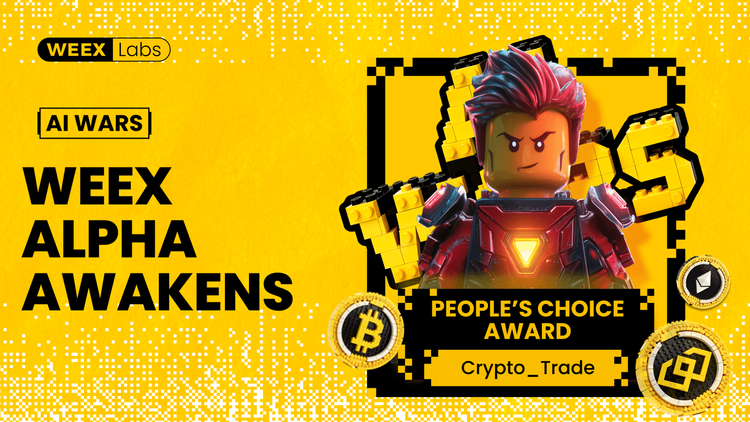
How a Structured AI Crypto Trading Bot Won at the WEEX Hackathon
Crypto_Trade shows how structured inputs and controlled adaptability can build a more stable and reliable AI crypto trading bot within the WEEX AI Trading Hackathon, highlighting a practical path toward scalable AI trading systems.

AI Starts to Devour the Manufacturing Industry | Rewire News Morning Edition
When Bezos starts using AI to buy factories instead of building data centers, it shows that he believes the next wave of AI's value is not inside the box.

When Scaling Meets Speed, Ethereum Foundation Introduces "Hardness" to Safeguard the Base Layer
Hardness is a protocol-level commitment to Ethereum core properties, including censorship resistance, privacy, security, and permissionlessness.
Google, Circle, Stripe Flock Together to Let AI Spend Money: Payment Giants' Joys and Worries in 2026 Q1
The real enemy is no longer each other, but zero cost itself

$100 Billion Factory Purchase: Bezos and Middle Eastern Capital Shift AI Money from Cloud to Shop Floor
Bezos doesn't invest in a new model; he invests in a supply chain.

Xiaomi and MiniMax both unleash their ultimate moves, signaling the start of the Agent Pricing War.
No brand, no marketing, let developers vote with their feet in 8 days

Predicting markets has taken the spotlight, but the Perp DEX has been quietly waging war on traditional exchanges.
During a weekend of relentless volatility, while traditional financial markets were closed, another wave of investors was busy trading gold, oil, and silver on a blockchain platform.

Is the Market Slump Still Making Millions a Day? Is pump.fun's Revenue Real?
If it's really that profitable, what's keeping $PUMP's price down?
Understanding x402 and MPP in One Article: The Two Paths of Agent Payments
x402 for in-protocol payments, MPP for off-chain payments

Quick Look at the Latest 18 Graduation Projects from Alliance: Who's the Next Pump.fun?
The project's core innovation areas include stablecoin payments, AI applications, prediction markets, and RWA tokenization.

It's not just the prediction market that profits from the Iraq War
Always maintaining the ambiguity of regulation with "offshore" may be the consensus of the perp DEX.
Who is the true winner of the "Tokenization" narrative?
Virtually everyone benefits, but the reason for the benefit, the timing, and the underlying logic are completely different.
Moss: The Era of AI-Traded by Anyone | Project Introduction
AI Trading Agent is rapidly growing its infrastructure.
Chip Smuggling Case Exposes Regulatory Loophole | Rewire News Evening Update
AI chips have become a strategic asset more sensitive than missiles
How a Structured AI Crypto Trading Bot Won at the WEEX Hackathon
Ritmex demonstrates how disciplined risk control and structured signals can make an AI crypto trading bot more stable and reliable on WEEX, highlighting the importance of combining execution discipline with scalable AI trading systems.
Old Indicator Fails, Three Major New Signals Emerge: BTC True Bottom May Still Be Below $60K
When the grocery shopping auntie on the subway, or Tony the hairdresser, start asking you about BTC, crypto, and cryptocurrency investments, selling immediately will be the only best option.
Meeting OpenClaw Founder at a Hackathon: What Else Can Lobsters Do?
Imperial College London MetaGame: AI Agent × Web3 Landing Three Major Directions.


 App
App