
- Buy Crypto
- Markets
 Futures
- Spot
- Copy Trade
 Earn
Earn- More
Redot Pay has completed a $40 million Series A round. Will Lightspeed Venture Partners and Sequoia Capital create a payment giant in the crypto world?

Doesn't cryptocurrency payment always feel a bit precarious? The wallet operations are cumbersome, the asset volatility is intimidating, and with the fog of regulation, the average person trying to buy a cup of coffee with cryptocurrency feels like they are embarking on an adventure. Ever since the $40 billion evaporation due to the UST collapse in 2022, "stablecoin" briefly became synonymous with risk, and the market's confidence in stablecoins has been fluctuating.
But change is underway. On March 13, 2025, the U.S. Senate Banking Committee passed the Stablecoin Regulation Act by 18 to 6, providing greater clarity on the compliance path for mainstream stablecoins like USDT and USDC. With the market's confidence restored, the cornerstone of trust in cryptocurrency payments is being solidified. Riding this wave of enthusiasm, the cryptocurrency payment platform Redot Pay announced on March 14 that it had completed a $40 million Series A funding round. The round was led by Lightspeed with participation from A-list institutions such as Sequoia China. The company's goal is to make cryptocurrency payments as easy as swiping a bank card, requiring no technical knowledge so that even those without a bank account can easily participate.
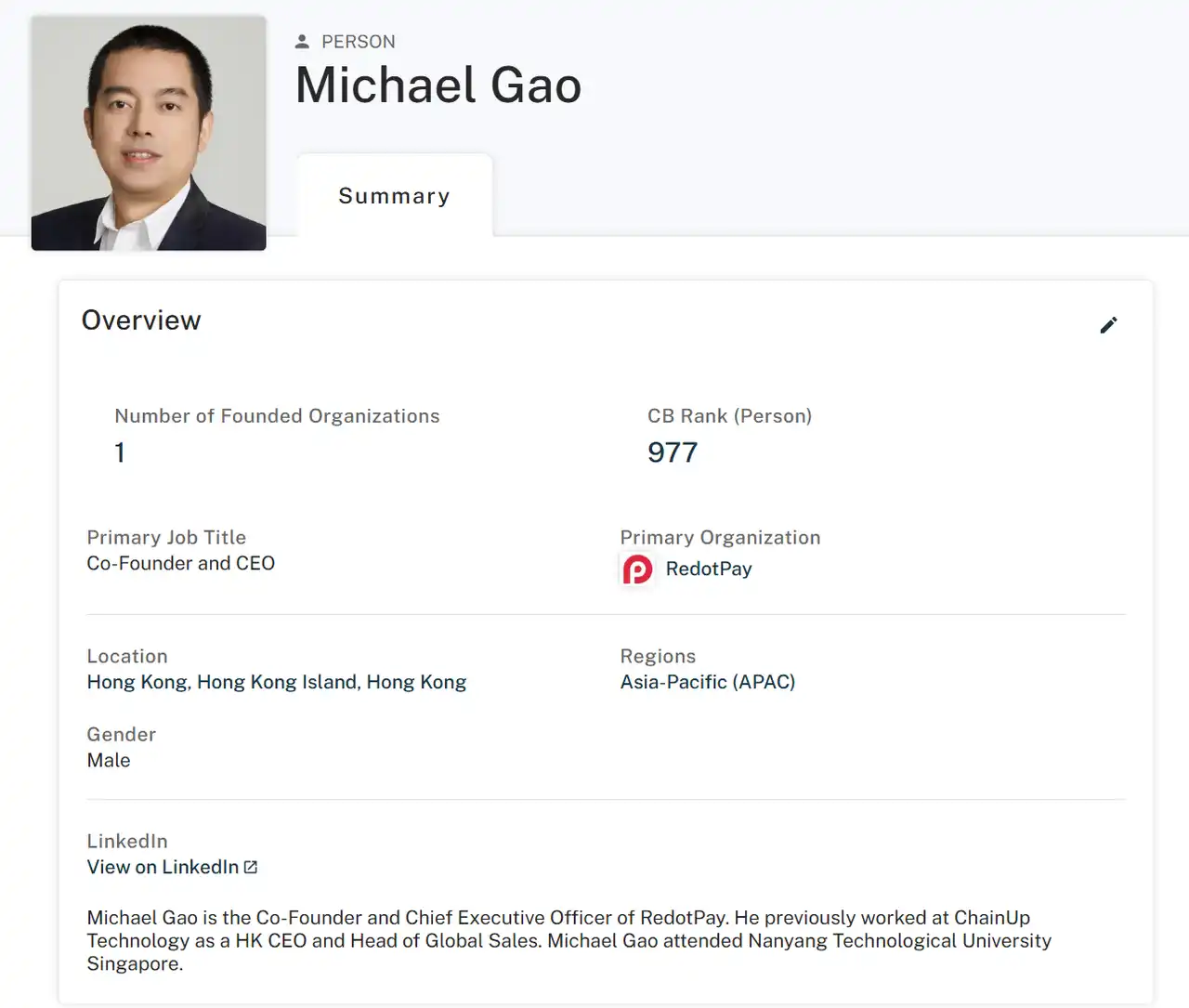
CEO Michael Gao stated, "What we are doing is solving real-world problems—making transparency and inclusivity our driving force."
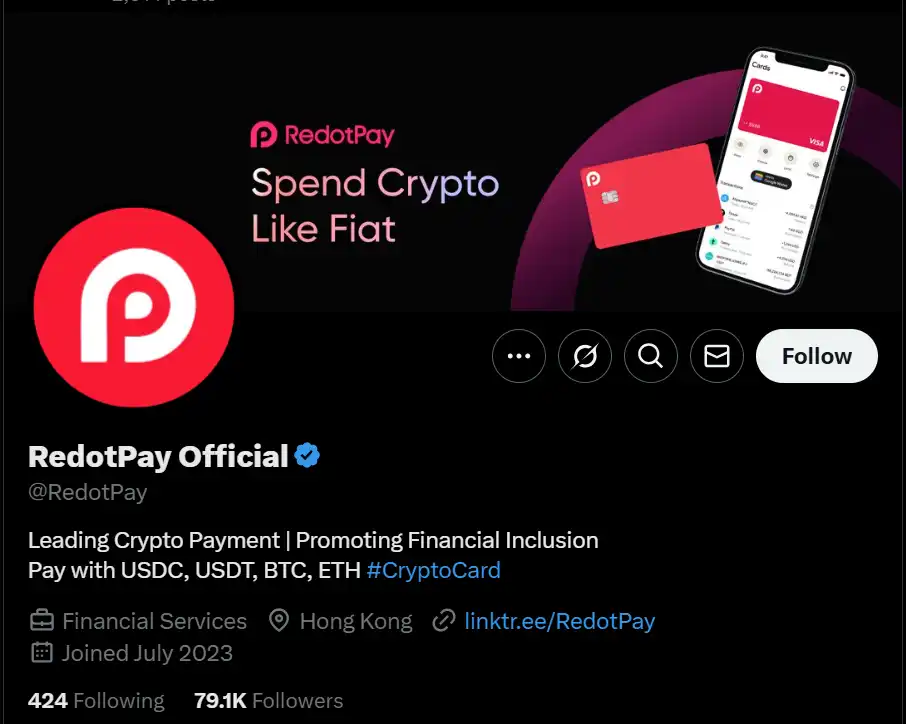
Founded in April 2023 and headquartered in Hong Kong, Redot Pay has emerged as a rising star in the cryptocurrency payment field. In less than two years, it has attracted over 3 million users. Redot Pay's mission is to enable global users, especially those without bank accounts, to easily access financial services. In other words, it is not just a transaction tool but also the entryway for many into the global financial system.
This round of funding will help Redot Pay accelerate the expansion of its global payment network, transforming cryptocurrency payments from being lofty to being more integrated into daily life. In the future, whether you are ordering a latte in a Hong Kong cafe, purchasing handicrafts in the Southeast Asian market, or sending cross-border remittances to family, Redot Pay may become your payment method.
Founder and Team: Low-Key Yet Hardcore Capable
Specific public information about the founder and core team of Redot Pay is relatively limited, and the core team maintains a low profile. CEO Michael Gao is a graduate of Nanyang Technological University in Singapore. Before founding Redot Pay, he served as the CEO of ChainUp Technology in Hong Kong and was responsible for global sales, showcasing strong business acumen and market insight.
Another co-founder, Jonathan Chan, is also a veteran in the industry. Teaming up with Gao, the two hope to make cryptocurrency payments no longer a game for geeks and speculators but a simple daily operation like swiping a bank card.
All-Star Investment Lineup
Fundraising is not just about "getting money to do things" but more like finding a group of "angel investors" to endorse you, help smoothen your path, and fill in the gaps. This time, Redot Pay has received support from a wave of top-tier investment institutions.
The lead investor for this round of funding is Lightspeed. This venture capital giant established in 2000 has a keen investment eye, having nurtured star companies like Snapchat and Affirm. This means that Redot Pay has not only received $40 million but also gained a "life mentor," bringing strategic guidance and global network resources, especially in consumer technology and financial technology.
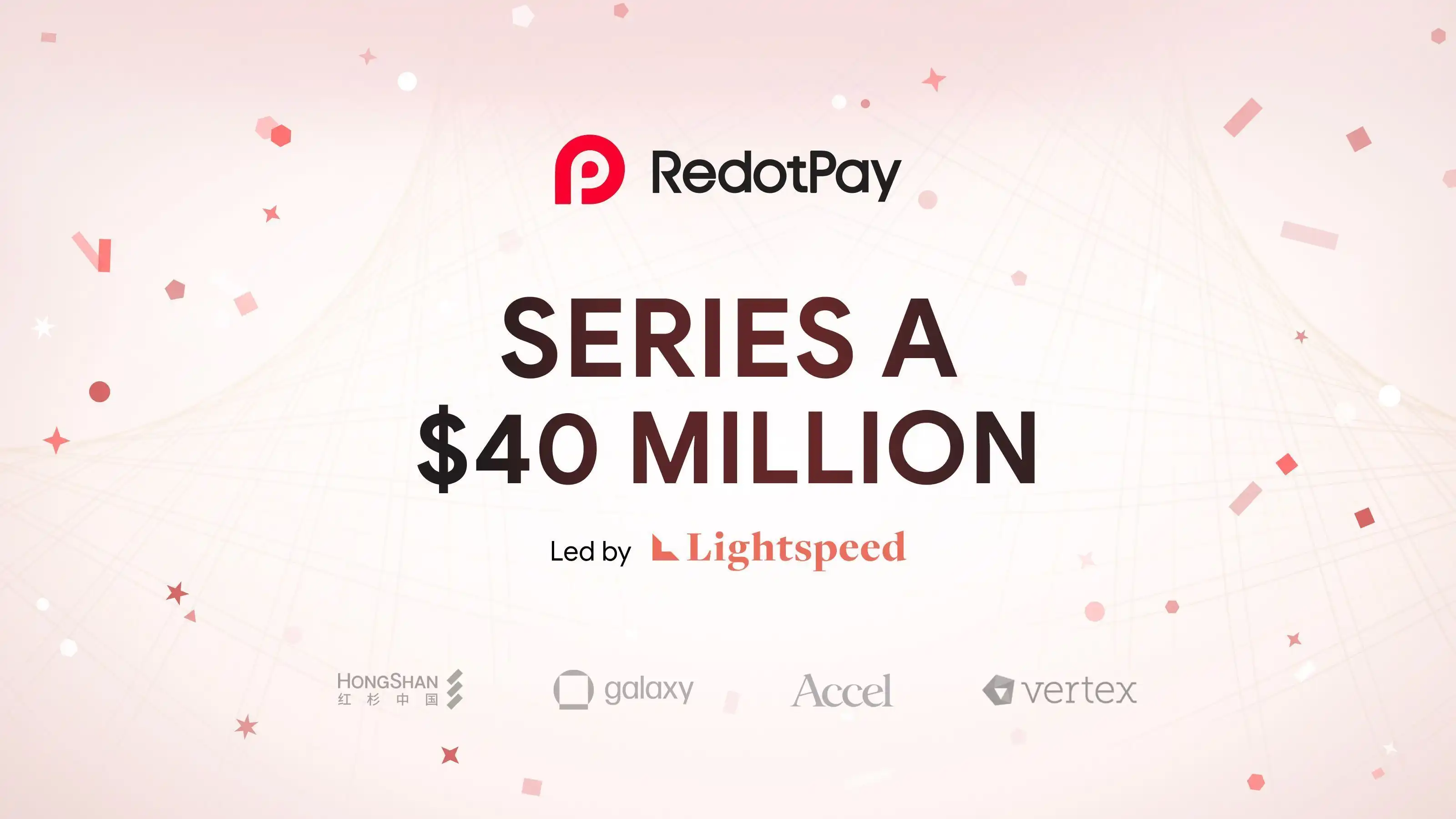
Looking at the participating lineup, Sequoia Capital China has deep roots in the Asian market and is considered the "West Point Military Academy of the Entrepreneurial Circle." Galaxy Ventures is a veteran player in the crypto field, while DST Global Partners, Accel, and Vertex Ventures are no pushovers. When these big players make a move, it's basically a bet that Redot Pay will become the next giant in the cryptocurrency payment sector.
With this background, Redot Pay may have deeper cooperation with giants like Visa and StriatX in the future. The speed of entering new markets may be faster than taking a high-speed rail. With the endorsement of top institutions to stabilize its footing and avoid pitfalls, this round of funding not only added $40 million to Redot Pay's account but also came with a VIP pass.
From "Future Trend" to "Immediate Opportunity"
Market demand has never been so strong. The enthusiasm for cryptocurrency payments is rapidly rising, shifting from a previous "future vision" to an "immediate opportunity." Currently, there are still 1.3 billion people worldwide without bank accounts, unable to easily access financial services. They have smartphones, they have networks, the only thing missing is a simple, efficient payment method.
Inflationary pressures, exchange rate fluctuations, and outdated financial infrastructure make people more eager than ever for decentralized payment methods. Of course, Redot Pay is not the only player on this track. Competitors like Triple-A are also entering the cryptocurrency payment space. To stand out, Redot Pay needs to excel in user experience and ecosystem integration. Is the payment process smooth enough? Is fiat currency exchange low-cost? Are there enough partner merchants? These are key factors determining success. Users won't pay the price for complex technology. Only if it's truly simple and user-friendly can it become the "Alipay" of the cryptocurrency payment era.
RedotPay's Hardcore Strength
The core goal of Redot Pay is to completely change the stereotype of cryptocurrency payments being "complex, high-threshold, and inconvenient." In November 2023, Redot Pay launched the Visa physical card, supporting global ATM withdrawals, allowing users to directly cash out their cryptocurrency assets.
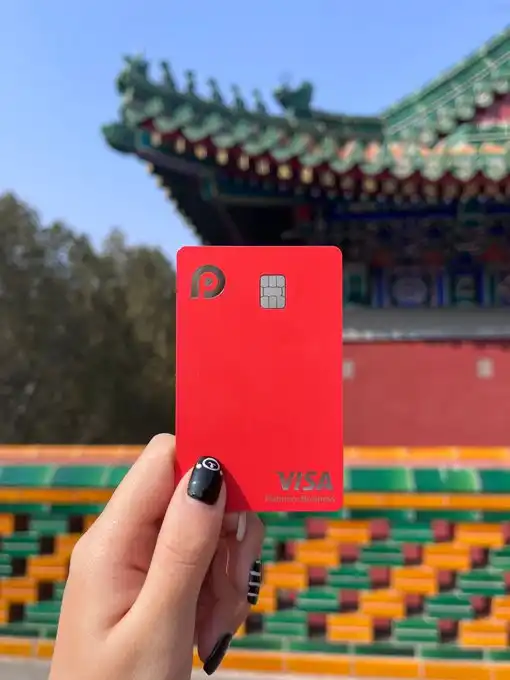
Simultaneously, a virtual card was also introduced, compatible with ApplePay and GooglePay, enabling users to spend cryptocurrency directly at offline stores or e-commerce platforms just like using a traditional bank card. In December 2024, the platform integrated with the Solana network, followed by joining the Arbitrum ecosystem in February 2025. By leveraging the advantages of these high-performance blockchains, transaction costs are reduced, and payment speed is increased.
Compared to payment platforms that still rely on a single chain, Redot Pay's multi-chain integration strategy is undoubtedly more forward-thinking, providing users with a smoother payment experience. In terms of ecosystem partnerships, Redot Pay is also accelerating the implementation of applications, with collaborations with StraitX and Visa, enabling it to take the lead in the retail payment market in Singapore.
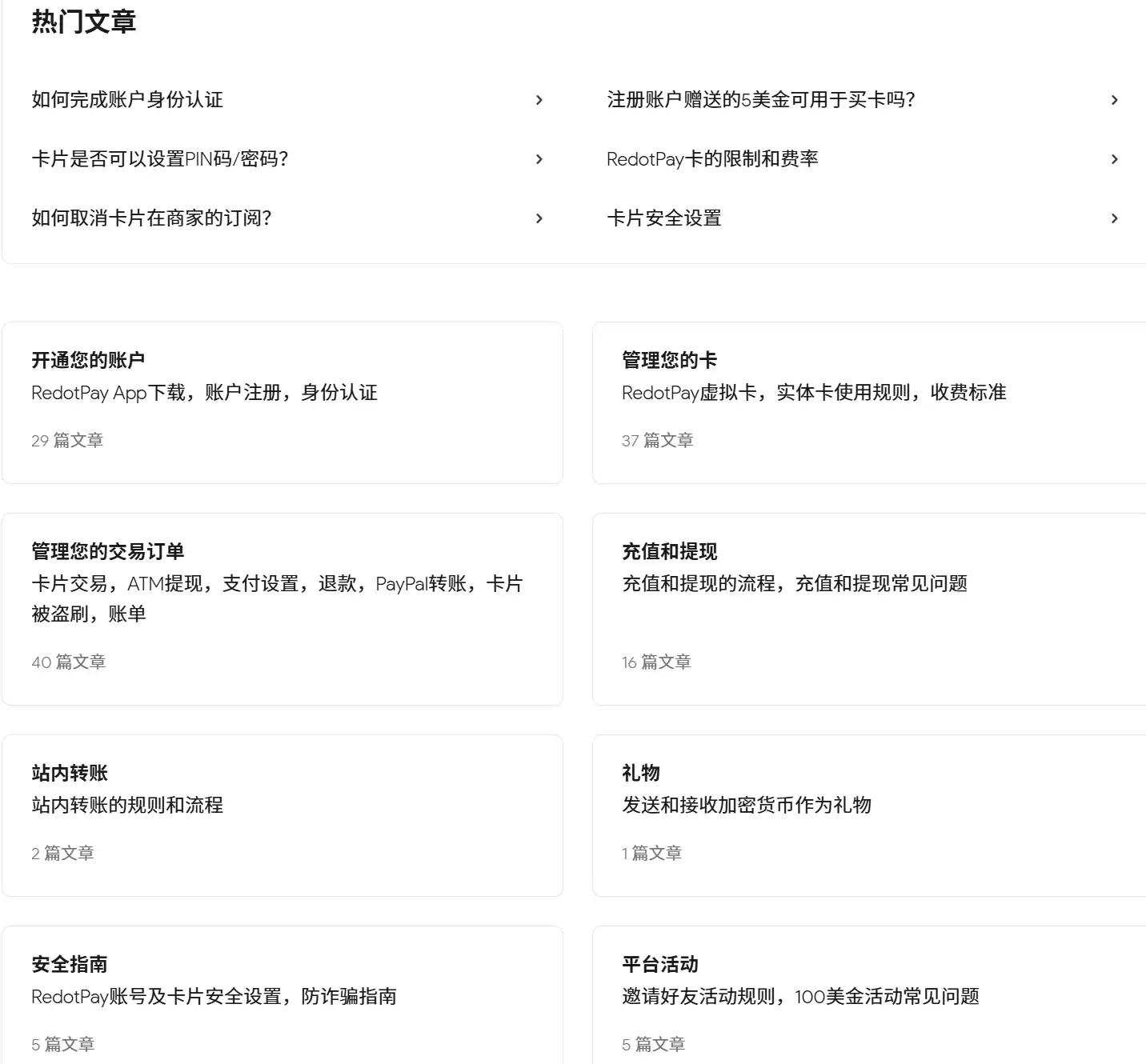
Comprehensive and Mature Interface Guidance
In less than two years, Redot Pay's user base has exceeded 3 million, a growth rate that clearly demonstrates its high market fit. Redot Pay is using technological innovation and practical application to prove that it is not just a "concept hype" shell company but a true dark horse aiming to make cryptocurrency payments mainstream. The current market situation provides a window of opportunity for its expansion, but amidst the industry's rapid development, changes in regulatory policies must not be ignored. Balancing compliance and innovation to stay ahead will be the key challenge for Redot Pay moving forward.
You may also like

February 9th Market Key Intelligence, How Much Did You Miss?

After being questioned by Vitalik, L2s are collectively saying goodbye to the "cheap" era

WEEX AI Trading Hackathon Paris Workshop Reveals: How Retail Crypto Traders Can Outperform Hedge Funds
Witness how WEEX's Paris AI Trading Hackathon revealed AI's edge over human traders. Explore key strategies, live competition results & how to build your own AI trading bot.

U.S. Oil (USOR) Price Prediction 2026–2030
Key Takeaways U.S. Oil (USOR) is a speculative Solana-based crypto project that aims to index the United States…

USOR Surges on Meme Narrative Despite No Real-World Asset Backing
Key Takeaways: USOR, a Solana-based token, has seen a notable surge driven by speculative narratives rather than verifiable…

How to Buy U.S. Oil Reserve (USOR) Cryptocurrency
Key Takeaways U.S. Oil Reserve (USOR) is a Solana-based token primarily traded on decentralized exchanges (DEXs). Claims have…

USOR vs Oil ETFs: Understanding Why the ‘Oil Reserve’ Token Doesn’t Track Crude Prices
Key Takeaways The U.S. Oil Reserve (USOR) token has become noteworthy for its claims, yet it does not…

Trend Research Reduces Ether Holdings After Major Market Turbulence
Key Takeaways: Trend Research has significantly cut down its Ether holdings, moving over 404,000 ETH to exchanges recently.…
Investors Channel $258M into Crypto Startups Despite $2 Trillion Market Sell-Off
Key Takeaways: Investors pumped approximately $258 million into crypto startups in early February, highlighting continued support for blockchain-related…
NBA Star Giannis Antetokounmpo Becomes Shareholder in Prediction Market Kalshi
Key Takeaways: Giannis Antetokounmpo, the NBA’s two-time MVP, invests in the prediction market platform Kalshi as a shareholder.…

Arizona Home Invasion Targets $66 Million in Cryptocurrency: Two Teens Charged
Key Takeaways Two teenagers from California face serious felony charges for allegedly attempting to steal $66 million in…

El Salvador’s Bukele Approval Reaches Record 91.9% Despite Limited Bitcoin Use
Key Takeaways: El Salvador President Nayib Bukele enjoys a record high approval rating of 91.9% from his populace,…

Crypto Price Prediction for February 6: XRP, Dogecoin, and Shiba Inu’s Market Movements
Key Takeaways: The crypto market experienced a notable shift with Bitcoin’s significant surge, impacting altcoins like XRP, Dogecoin,…

China Restricts Unapproved Yuan-Pegged Stablecoins to Maintain Currency Stability
Key Takeaways: China’s central bank and seven government agencies have banned the issuance of yuan-pegged stablecoins abroad without…

Solana Price Prediction: $80 SOL Looks Scary – But Smart Money Just Signaled This Might Be the Bottom
Key Takeaways Despite Solana’s descent to $80, some traders find security as smart money enters the fray, suggesting…

XRP Price Prediction: Major Ledger Upgrade Quietly Activated – Why This Could Be the Most Bullish Signal Yet
Key Takeaways: The activation of the Permissioned Domains amendment on XRPL represents a significant development in XRP’s potential…

Dogecoin Price Prediction: Death Cross Confirmed as DOGE Falls Below $0.10 – Is DOGE Reaching Zero?
Key Takeaways The death cross event signals potential bearish trends for Dogecoin as its price dips under $0.10,…

Stablecoin Inflows Have Doubled to $98B Amid Selling Pressure
Key Takeaways Stablecoin inflows to crypto exchanges have surged to $98 billion, doubling previous levels amidst heightened market…
February 9th Market Key Intelligence, How Much Did You Miss?
After being questioned by Vitalik, L2s are collectively saying goodbye to the "cheap" era
WEEX AI Trading Hackathon Paris Workshop Reveals: How Retail Crypto Traders Can Outperform Hedge Funds
Witness how WEEX's Paris AI Trading Hackathon revealed AI's edge over human traders. Explore key strategies, live competition results & how to build your own AI trading bot.
U.S. Oil (USOR) Price Prediction 2026–2030
Key Takeaways U.S. Oil (USOR) is a speculative Solana-based crypto project that aims to index the United States…
USOR Surges on Meme Narrative Despite No Real-World Asset Backing
Key Takeaways: USOR, a Solana-based token, has seen a notable surge driven by speculative narratives rather than verifiable…
How to Buy U.S. Oil Reserve (USOR) Cryptocurrency
Key Takeaways U.S. Oil Reserve (USOR) is a Solana-based token primarily traded on decentralized exchanges (DEXs). Claims have…


 App
App