
- Buy Crypto
- Markets
 Futures
- Spot
- Copy Trade
- Earn
- More
Solana ETF: SEC Signals Potential July Approval - What Investors Need to Know Now

The crypto investment landscape is on the cusp of another significant milestone. Following the successful launches of Bitcoin and Ethereum ETFs, Solana appears next in line for regulatory approval, with signs pointing to a possible July debut. Recent developments from the SEC have ignited fresh optimism in the market, sending SOL prices higher and positioning investors for what could be a transformative moment for this high-performance blockchain.
Breaking Development: SEC Fast-Tracks Solana ETF Review Process
In a significant development that has energized the crypto market, the U.S. Securities and Exchange Commission (SEC) has requested multiple asset management firms to submit updated S-1 registration filings for their Solana ETF applications within a seven-day window. According to sources familiar with the matter, the SEC is specifically focusing on revisions related to in-kind redemption mechanisms and staking capabilities—two critical components that will define how these investment vehicles operate.
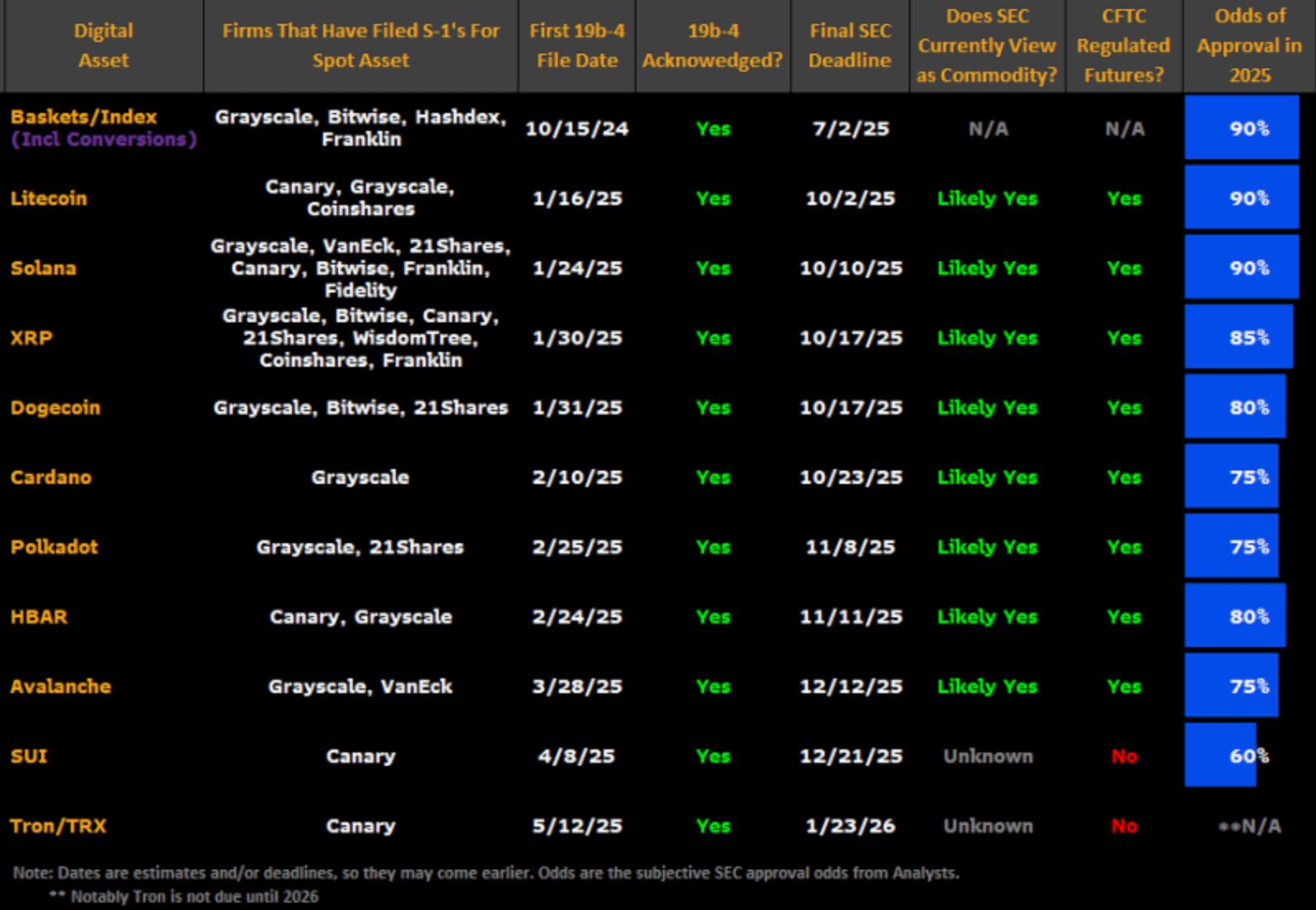
This regulatory advancement comes just months after the successful launch of spot Ethereum ETFs in the U.S. market, suggesting the SEC is maintaining momentum on crypto ETF approvals. Bloomberg senior ETF analyst James Seyffart has expressed optimism about the timeline, noting that approval could come "as early as July," significantly ahead of the October deadline for the 19b-4 filings (exchange listing rule applications).
Fellow Bloomberg analyst Eric Balchunas has increased his probability assessment for Solana ETF approval from 70% to a striking 90%, tweeting that investors should "get ready for potential altcoin ETF summer, with Solana likely leading the charge (along with some basket products)."
Unpacking the SEC's Key Focus Areas
In-Kind Redemptions: Critical for ETF Efficiency
One of the SEC's primary concerns centers on the in-kind redemption mechanism, which allows ETF shareholders to redeem their fund shares for the underlying asset (SOL tokens) rather than cash. This feature is considered superior to cash redemptions for several reasons:
Tax efficiency: In-kind redemptions typically trigger fewer taxable events for the fund, potentially resulting in lower capital gains distributions to shareholders
Lower transaction costs: Reduces the need for the fund to liquidate assets to meet redemption requests
Market price alignment: Helps authorized participants maintain tighter spreads between the ETF price and its net asset value
The SEC is asking issuers to clarify their redemption processes, including how they'll value assets, whether partial cash redemptions will be permitted, and the operational workflow for transferring SOL tokens to authorized participants. According to ETF experts at ETF.com, these mechanisms are essential for maintaining the arbitrage efficiency that makes ETFs attractive to institutional investors.
Staking Functionality: The Yield-Generating Advantage
Perhaps more intriguing is the SEC's apparent openness to including staking functionality in Solana ETFs—a potentially groundbreaking development in the crypto ETF space.
Solana, like Ethereum, operates on a Proof-of-Stake consensus mechanism that allows token holders to "stake" their assets to help secure the network while earning rewards. According to Staking Rewards data, Solana currently offers an impressive 7.56% staking yield, more than double Ethereum's 3.13%.
This yield-generating capability could significantly enhance the appeal of Solana ETFs compared to their Bitcoin and Ethereum counterparts, which currently don't incorporate staking. The SEC's willingness to consider staking in Solana ETFs marks a notable shift from its previous stance, where concerns about securities characteristics had made the regulator wary of yield-generating features.
A research paper from the CFA Institute suggests that staking yields could significantly impact the total return profile of crypto ETFs, potentially attracting income-focused investors who might otherwise avoid the volatile crypto sector.
The Institutional Players Backing Solana ETFs
The race to launch Solana ETFs features an impressive lineup of financial institutions, many of which were instrumental in bringing Bitcoin and Ethereum ETFs to market:
Grayscale: Planning to convert its existing SOL trust to a spot ETF, replicating its successful conversion strategy with Bitcoin and Ethereum
Fidelity: Leveraging its vast distribution network and crypto expertise
VanEck: Known for its innovative ETF products and early crypto adoption
Franklin Templeton: Bringing traditional finance credibility
Bitwise: Focusing on crypto-native expertise
21Shares: With significant international crypto ETF experience
Canary Capital: A newer entrant looking to establish its position
According to ETF Database, these issuers will likely compete on expense ratios, liquidity provisions, and additional features like staking yields, creating a competitive landscape that could benefit investors through lower fees and enhanced product features.
Market Impact: What Solana ETF Approval Could Mean for SOL Price
Historical patterns suggest significant price implications for SOL if its ETF receives approval. Bitcoin experienced approximately a 60% price increase in the three months following its ETF approval, though Ethereum's price action post-ETF launch has been more subdued.
If SOL were to replicate Bitcoin's post-approval performance, its price could potentially reach the $250-300 range from its current ~$160 level. However, investors should approach such projections with caution, as market conditions and investor sentiment have evolved since the Bitcoin ETF launch.
Technical indicators provide additional context for SOL's potential trajectory:
Recent breakthrough of the $154 resistance level signals strengthening buyer momentum
RSI, Stochastic Oscillator, and Commodity Channel Index (CCI) all show positive signals
Key resistance levels ahead at $181, $187, and $194
30-day and annual moving averages (down 5.3% and 2.9% respectively) suggest the recent rally hasn't yet fully reversed the previous bearish structure
Cryptocurrency analyst Grayhooood on TradingView notes that SOL's technical setup appears stronger than during previous rallies, potentially indicating sustained momentum if fundamental catalysts like ETF approval materialize.
Investor's Action Guide: Navigating the Pre-Approval Landscape
With potential approval just weeks away, investors face critical decisions about positioning themselves for this development. Here's a strategic framework to consider:
ETF vs. Direct SOL Holdings: Pros and Cons
ETF Advantages:
Seamless integration with traditional brokerage accounts
No need for crypto wallets or security management
Potential tax advantages in retirement accounts
Exposure to staking yields without technical expertise (if allowed)
Direct SOL Holding Advantages:
No management fees
Full control over staking decisions
Access to Solana ecosystem applications (DeFi, NFTs, etc.)
Not subject to ETF premium/discount fluctuations
According to research from Bitwise Asset Management, institutional investors overwhelmingly prefer regulated ETF products for crypto exposure, suggesting significant potential inflows if approval occurs.
Pre-Approval Investment Strategies
Grayscale Solana Trust (GSOL): Currently trading at a significant discount to NAV, which could narrow or disappear upon ETF conversion
Crypto ETFs with Solana exposure: Several crypto basket ETFs already offer some SOL exposure
Canadian Solana ETFs: Already available on the Toronto Stock Exchange with staking features
SOL futures products: CME-traded Solana futures and related ETFs offer regulated exposure
DCA strategy: Dollar-cost averaging into SOL directly to reduce timing risk
The Expanding Crypto ETF Ecosystem
Solana's potential approval would represent another step in the broader maturation of crypto investment products. According to James Seyffart's latest predictions, several other crypto assets are also positioned for potential ETF approval with varying probabilities:
Litecoin: 90%
XRP: 85%
Dogecoin, HBAR: 80%
Cardano, Polkadot, Avalanche: 75%
SUI: 60%
This progression follows a now-familiar pattern established with Bitcoin and Ethereum:
Futures ETF approval
CME futures launch
International spot ETF precedents
U.S. spot ETF approval
Solana has already completed steps 1-3, with the CME launching SOL futures in February 2024 and Canadian Solana ETFs launching in April 2024.
One remaining hurdle is that the SEC previously classified SOL as an "unregistered security" in lawsuits against exchanges. While some of these suits have been paused or withdrawn, the security classification hasn't been formally clarified or adjudicated, potentially presenting a regulatory obstacle. Despite this, analysts at Galaxy Digital Research suggest the SEC's willingness to process Solana ETF applications indicates a pragmatic shift in regulatory approach.
Conclusion: Preparing for the Solana ETF Era
The potential July approval of Solana ETFs represents a significant milestone not just for SOL investors, but for the broader acceptance of crypto assets within traditional finance. With the SEC now focusing on implementation details rather than fundamental objections, the likelihood of approval appears stronger than ever.
Key developments to watch in the coming weeks:
Updated S-1 filings from issuers addressing SEC comments
Any public statements from SEC officials on crypto ETFs
Trading volumes in SOL futures and related derivatives
Institutional positioning ahead of potential approval
For investors, the next few weeks offer a critical window to evaluate exposure strategies, understand the unique features of each issuer's proposed product, and position portfolios accordingly. Whether through direct SOL holdings, existing trusts, or waiting for ETF launch, the expanding investment options signal a maturing ecosystem with increasingly sophisticated ways to gain exposure to this high-performance blockchain.
This article is for informational purposes only and does not constitute investment advice. Always conduct your own research and consider consulting with a financial advisor before making investment decisions.
You may also like

Dovey Wan: The Great Liquidity Schism, Bitcoin May Never Keep Up with ARKK

Market Key Insights for February 26th, How Much Did You Miss?

L1 Value Capture Shrinks Significantly, ETH, SOL, HYPE Struggle to Return to All-Time High

Exploring the ‘Super Cycle’ in Artificial Intelligence: Insights from Brad Gerstner
Key Takeaways The concept of a ‘super cycle’ in AI technology is gaining traction, spearheaded by industry experts.…

Children and Trump’s Investment Program: Billionaires’ Contributions to “Trump Accounts”
Key Takeaways: President Donald Trump has introduced the “Trump Accounts” program, massively funded by billionaires to provide financial…

Could Stablecoins Resolve U.S. Debt? Standard Chartered Predicts $1 Trillion in Treasury Demand
Key Takeaways Projected Growth: The stablecoin market could see its capitalization soar to $2 trillion by 2028, significantly…
Missouri Advances Bitcoin Reserve Bill to House Committee in Policy Push
Key Takeaways Missouri pushes HB 2080, aiming to establish a state-run Bitcoin Strategic Reserve Fund. The bill mandates…

Ethereum Faces $1,500 Downside as Vitalik Buterin Sells 9,000 ETH
Key Takeaways Vitalik Buterin’s recent sale of nearly 9,000 ETH has triggered concerns over Ethereum’s price stability, given…
Hong Kong to Connect New Digital Bond Platform With Regional Crypto Tokenization Hubs
Key Takeaways Hong Kong is pioneering the integration of its debt market with blockchain technology through a new…

Elon’s Grok AI Predicts the Price of XRP, Cardano, and Ethereum by 2026
Key Takeaways Grok AI forecasts significant price growth for XRP, Cardano, and Ethereum by 2026. XRP could see…

Anchorage Digital Confirms Its Stake in Strategy’s STRC – A Sign of Long-term Confidence
Key Takeaways Anchorage Digital has officially disclosed holding Strategy’s STRC perpetual preferred stock, reinforcing its strategic alignment within…

Bitcoin Price Prediction: Major Miner Expands in Texas: Is a Massive BTC Production Surge Anticipating?
Key Takeaways: Canaan Inc. has expanded its role from hardware selling to direct Bitcoin production by acquiring a…

Crypto Price Prediction Today 25 February: XRP, Solana, Bitcoin
Key Takeaways Bitcoin’s recent surge to $66,000 reflects a potential bullish trend bolstered by institutional interest and regulatory…

Bitcoin Climbs on Market Optimism Ahead of Trump’s State of the Union
Key Takeaways Bitcoin’s price surged over $2,000 to surpass the $66,000 mark following optimistic signals prior to Trump’s…

An AI Crypto Agent Accidentally Bestows Six Figures, Then a Twist of Fate Strikes
Key Takeaways: An AI crypto agent mistakenly sent 52.4M LOBSTAR tokens to an unintended recipient due to a…
XRP Price Prediction: Will Massive Whale Movements Lead to a Crash Below $1?
Key Takeaways Significant whale activity on Binance has seen the movement of over 31 million XRP, causing potential…
Arizona Just Named XRP in a State Crypto Reserve Bill — Is Government Adoption Beginning?
Key Takeaways Arizona’s Senate Bill 1649 proposes the inclusion of XRP and DigiByte, alongside Bitcoin, in a Digital…

Ethereum Secures FOCIL and Redirects $6.8M in ETH to Staking
Key Takeaways Ethereum’s Hegota upgrade in the second half of 2026 will integrate the FOCIL proposal, reinforcing censorship…
Dovey Wan: The Great Liquidity Schism, Bitcoin May Never Keep Up with ARKK
Market Key Insights for February 26th, How Much Did You Miss?
L1 Value Capture Shrinks Significantly, ETH, SOL, HYPE Struggle to Return to All-Time High
Exploring the ‘Super Cycle’ in Artificial Intelligence: Insights from Brad Gerstner
Key Takeaways The concept of a ‘super cycle’ in AI technology is gaining traction, spearheaded by industry experts.…
Children and Trump’s Investment Program: Billionaires’ Contributions to “Trump Accounts”
Key Takeaways: President Donald Trump has introduced the “Trump Accounts” program, massively funded by billionaires to provide financial…
Could Stablecoins Resolve U.S. Debt? Standard Chartered Predicts $1 Trillion in Treasury Demand
Key Takeaways Projected Growth: The stablecoin market could see its capitalization soar to $2 trillion by 2028, significantly…


 App
App